
06
Oct 2026
17th Aug 2026
Rowan Precision has spent more than 30 years producing high-quality precision machined components for national and international customers, building its capability around 13-axis CNC sliding-head machining, twin-spindle fixed-head mill-turn centres and five-axis/multi-axis machining. Its position within the supply chain provides a useful perspective on a wider manufacturing conversation: the strength of major UK programmes is closely connected to the capability that exists throughout their supplier base.
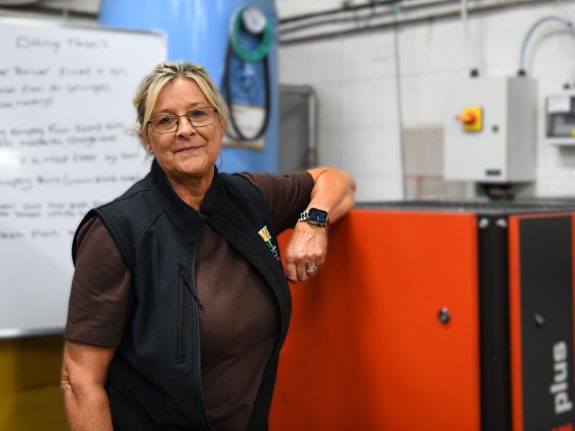
For Karen Harrison, Head of Operations at Rowan Precision, successful supply chains increasingly depend upon combining technical capability with communication, consistency and long-term relationships. “Every precision component has a purpose further along the supply chain,” said Harrison. “Our responsibility is to understand that purpose and manufacture accordingly. Accuracy, repeatability, delivery, traceability and communication all contribute to the customer’s ability to deliver their own programme successfully.”
Much of the discussion around manufacturing resilience naturally focuses on capacity, sourcing strategies and major programmes. On the factory floor, resilience becomes much more tangible. It is found in whether a component can be produced repeatedly to specification. It is found in process capability, machine availability, inspection, quality systems and the knowledge of the engineers responsible for production. Rowan Precision has deliberately developed a manufacturing platform capable of addressing complex requirements across turned and multi-axis machined components.
At the heart of its turned-parts capability are 13-axis CNC sliding-head machines, technology particularly suited to efficient production of complex precision components. These are complemented by multi-axis, twin-spindle fixed-head CNC mill-turn machining centres, incorporating up to 24 mill/drill heads, together with five-axis machining capability that enables complex features and tight positional tolerances to be produced in a single operation. Reducing the number of separate operations required to manufacture a component can create important benefits throughout production, from consistency and repeatability to throughput and process control.
Harrison believes that capability has to be viewed through the customer’s requirements rather than simply as a list of machinery.
“Customers ultimately want confidence in the component and confidence in the supplier producing it,” she said. “The value of advanced machining technology is in what it allows us to achieve for them — complex features, controlled tolerances, repeatable production and efficient processes.”
That distinction is becoming increasingly important as UK manufacturers examine how relationships between OEMs, Tier 1 organisations and specialist SMEs can support stronger domestic supply chains. A precision engineering company may sit several stages away from the finished product, yet the components it manufactures can still carry considerable importance. Dimensions have to remain controlled. Materials and processes need appropriate traceability. Production has to be repeatable. Documentation needs to support the customer’s requirements. Delivery performance has to align with the wider programme.
For Rowan Precision, therefore, a successful customer relationship begins with understanding what the customer is trying to achieve. The company’s invitation to customers is deliberately straightforward: “Got a project? Talk to one of our engineers.” It captures an important feature of specialist manufacturing. Engaging machining expertise around a component provides opportunities to consider manufacturability, production strategy, tooling, cycle times and inspection before volume requirements develop.
“Some of the strongest customer relationships are the ones where engineering conversations start early,” Harrison explained. “When we understand the component, the application and the production requirement, our team can consider how best to manufacture it using the capability available to us. “That creates a collaborative relationship centred around producing the right outcome.”
Capability also has to be supported by systems capable of providing customers with confidence. Rowan Precision holds AS9100, ISO 9001:2015 and ISO 13485 accreditation, giving the business a quality framework relevant to some of the most demanding manufacturing environments. AS9100 is particularly significant as Rowan Precision develops its presence within aerospace. The company’s membership of the Midlands Aerospace Alliance further connects the Birmingham manufacturer with one of the UK’s most important concentrations of aerospace engineering expertise.
ISO 13485, meanwhile, provides a quality management framework specifically associated with medical devices, complementing the company’s wider ISO 9001:2015 certification. Together, the accreditations illustrate how specialist machining suppliers increasingly combine production technology with rigorous management and quality systems.
For Harrison, these systems form part of a shared manufacturing language between Rowan Precision and its customers.
“Quality is built through the whole manufacturing process,” she said. “Our accreditations provide the framework, while our people, machining processes, inspection and documentation apply that discipline every day. “When customers place work into their supply chain, they need confidence that the standards surrounding the component are every bit as strong as the machining itself.” There is another dimension to strong supplier relationships: investment.
Advanced manufacturing businesses continually make decisions about machine tools, software, tooling, inspection equipment, energy efficiency and skills. The confidence to make those investments increases when suppliers have meaningful visibility of future requirements. Forecasting and regular dialogue can therefore influence much more than production scheduling. They can help manufacturers plan capacity, develop employees, consider new technology and determine where future capability will be required.
Rowan Precision itself provides an example of this longer-term approach. Alongside its CNC machining capability, the company has continued investing in its manufacturing environment, including recent energy-efficiency improvements to its Birmingham facility. Skills development is equally important. Apprentices have become part of Rowan Precision’s strategy for developing the next generation of engineering capability, gaining exposure to real production environments and modern CNC manufacturing.
“A strong order book gives manufacturers work; a strong partnership gives them the confidence to plan,” Harrison said. “Visibility allows suppliers to think about capacity, people and future capability. Those decisions ultimately strengthen the service that can be provided back to customers.”
The importance of this relationship becomes particularly apparent in sectors such as aerospace, defence and medical manufacturing. Major organisations provide scale, programme leadership and market access. Specialist manufacturers provide focused production knowledge and manufacturing capability built around particular processes. Precision machining SMEs can consequently hold expertise that is highly concentrated.
A sliding-head machining specialist understands how to manufacture complex turned components efficiently. A five-axis machinist understands how features, datum structures, tooling and workholding interact across a complex part. Experienced production engineers understand how a drawing translates into a stable, repeatable manufacturing process.
Connecting that expertise effectively through the supply chain can create value considerably beyond the individual component.
“There is tremendous manufacturing knowledge throughout the UK SME community,” Harrison said. “Our own expertise is precision CNC machining, and our role is to keep developing that capability so customers can draw upon it when their programmes require it. “When specialist manufacturers invest in technology, quality and people, that capability becomes available to the wider UK supply chain.”
For Rowan Precision, the future opportunity is therefore about doing what specialist manufacturers have always done best: developing deep capability and connecting it effectively with customers. The difference is that the strategic importance of those relationships is becoming increasingly visible. Advanced programmes depend upon reliable components. Reliable components depend upon capable manufacturing processes. Those processes depend upon investment in machinery, systems and people.
From 13-axis sliding-head turning to twin-spindle fixed-head mill-turn machining and complex five-axis production, Rowan Precision occupies one highly specialised part of that chain. Yet multiply similar capabilities across hundreds of UK manufacturing SMEs and the result is something much larger: an industrial base capable of supporting sophisticated products, major programmes and internationally competitive manufacturing.
“Supply chain strength is created through thousands of individual manufacturing commitments being delivered consistently,” Harrison concluded. “For Rowan Precision, our contribution is clear: invest in our people, maintain strong quality systems, continue developing our machining capability and work closely with customers. “When every specialist in the supply chain performs at its best, that capability carries all the way through to the finished product.”
For UK manufacturing, that may be one of the most important principles of supply chain resilience: major industrial success is built from precision delivered at every tier.