
06
Oct 2026
14th Mar 2026
Back in 2023, Rowan Precision, the Birmingham-based precision engineering specialist, strengthened its position in the fast-growing medical devices sector after achieving the internationally recognised ISO 13485 accreditation.
The certification marked a significant milestone for the company, confirming that its quality management systems, manufacturing processes and supplier controls meet the stringent regulatory requirements demanded by the global medical technology industry.
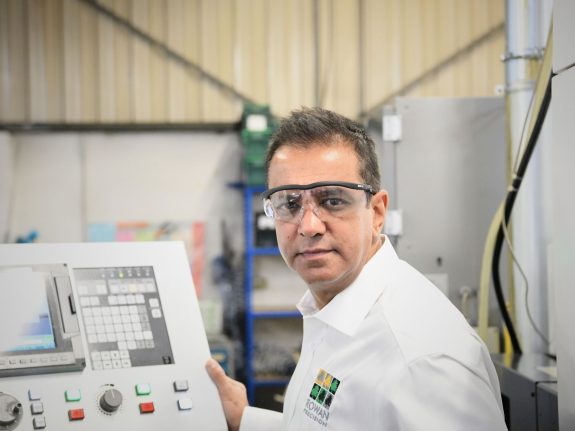
Today for Rowan Precision, the accreditation reflects a natural alignment between the company’s core capabilities in sliding head CNC machining and precision turning and the exacting standards required to manufacture medical device components.
Jaz Khunkun, Chief Commercial Officer at Rowan Precision, said the achievement highlights how high-value UK precision engineering is increasingly intersecting with healthcare innovation.
“Medical device manufacturing demands an exceptional level of consistency, traceability and precision,” said Khunkun.
“Sliding head CNC machining is particularly well suited to this sector because it allows us to produce extremely accurate, repeatable components in materials such as surgical-grade stainless steels and specialist alloys. That marriage between engineering precision and medical regulation is exactly what ISO 13485 recognises.”
ISO 13485 is a globally recognised framework developed specifically for manufacturers supplying the medical device sector. Achieving the accreditation requires extensive external auditing of a company’s quality systems, risk management procedures, manufacturing processes and supplier controls.
For Rowan Precision, the process involved a comprehensive review of its operational procedures to ensure full alignment with the regulatory expectations placed on companies supplying critical healthcare components.
Aston explained that while the standard focuses on compliance, its real value lies in building trust across the supply chain.
“In medical technology, patient safety sits at the centre of everything,” he said.
“ISO 13485 gives our customers confidence that every component leaving our facility has been manufactured under tightly controlled conditions, with full traceability and rigorous quality assurance.”
Alongside achieving accreditation, Rowan Precision has undertaken a series of visits to potential medical device customers to better understand the sector’s specific requirements and to establish secure supply relationships.
These engagements allow the company to align its machining processes with the complex design and regulatory expectations faced by medical manufacturers.
“Our approach has been to work closely with customers from the outset,” Khunkun added.
“By understanding their product development challenges and regulatory obligations, we can tailor our manufacturing processes to support them. That collaboration is essential in medical engineering, where even the smallest component plays a critical role in the final device.”
The company’s investment in sliding head CNC technology has been central to this strategy. The process enables the high-volume production of small, complex, and highly precise components — an increasingly important capability as medical devices become smaller and more technically sophisticated.
From surgical instruments to implantable device components, the demand for ultra-precise turned parts continues to grow as healthcare technology advances.
Aston believes the move into medical manufacturing also strengthens Rowan Precision’s long-term resilience.
“Diversifying into regulated sectors like medical devices helps future-proof the business,” he said.
“The UK has a long tradition of world-class precision engineering, and by combining that heritage with internationally recognised quality systems we can support industries that quite literally improve patient outcomes.”
With ISO 13485 now embedded within its operations, Rowan Precision aims to deepen its partnerships with medical device manufacturers and expand its presence in the sector.
For Aston, the accreditation represents more than a quality benchmark — it signals the company’s commitment to supporting the next generation of medical technology.
“Precision engineering has always been about solving difficult manufacturing problems,” he said.
“When those solutions contribute to safer, more effective medical devices, it gives our work an even greater sense of purpose.”