
22
Feb 2026
7th Dec 2025
New analysis of UK apprenticeship data shows that manufacturing and engineering (M&E) apprenticeships have risen only marginally over the past year — a trend industry leaders fear will do little to ease the sector’s mounting skills shortage.
According to the latest figures, there were 46,070 apprenticeship starts across M&E in the past 12 months, up from 45,800 the previous year — a rise of just 0.6%. Despite remaining one of the country’s top three apprenticeship destinations, the sector is still short of the peak intake seen in 2019/20, when more than 52,000 people entered engineering and manufacturing apprenticeships.
For Glenn Aston, CFO of Rowan Precision, the Birmingham-based CNC machining specialist, the numbers reflect the broader challenge facing UK industry.
“Any increase in apprenticeship starts is positive, though at 0.6% we are still scratching the surface of the opportunity,” said Aston. “Manufacturing is transforming at pace — digitalisation, automation and sustainability demands are reshaping the skills we require. The talent pipeline simply needs to follow suit, that’s why we look to our own future through support of apprenticeships.”
Rowan Precision have built its reputation for its advanced machining capability: sliding-head 13-axis CNC turning, multi-axis fixed-head mill-turn centres, and five-axis machining cells capable of delivering complex geometries in a single operation.
Under-19s accounted for 19,400 starters, reaffirming the continued importance of apprenticeships as a pathway for school leavers. Yet with an ageing industrial workforce and intensifying global competition, Aston argues that the UK can do more.
“We need a long-term strategy that makes engineering a compelling, accessible career for young people. “The data shows interest is there, the support structure needs strengthening and we can do our bit by celebrating the achievements of those who have made the leap.”
Demand for core technical roles remains strong. Installation and Maintenance Electricians recorded 7,130 apprenticeship starts, while Engineering Technicians accounted for 4,120.
One standout increase came in Machining Technician apprenticeships, rising sharply from 250 to 1,200 in a year — a development particularly welcomed by companies like Rowan Precision, which rely on high-calibre machining talent for advanced aerospace and defence components.
“The growth in machining apprenticeships is encouraging and absolutely aligned with what companies like ours need,” said Aston. “Precision engineering is a critical capability for UK industry, and it’s vital that we rebuild that skills base from the ground up.”
Digital technology apprenticeships grew to 31,620 starts, now the fourth most popular destination. Analysts say the convergence of digital and mechanical engineering fields highlights the need for hybrid skillsets.
“The next generation of engineers will need to be as confident with data and automation as they are with traditional machining,” he said. “Embedding digital skills into engineering apprenticeships isn’t optional anymore — it’s essential for competitiveness.”
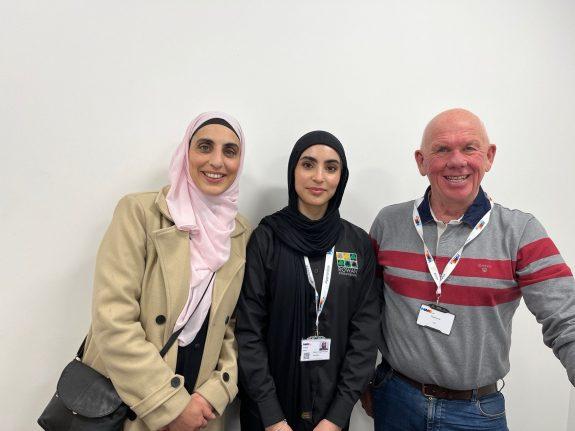
Rowan Precision highlighted the progress of its own apprentices — part of its ongoing commitment to developing talent internally.
Khadijah Zaman, Apprentice Engineering Support, has recently joined the company. Sheriyar Hussain, is a second-year Apprentice CNC Machinist. and William Robinson, has transitioned from the shop floor into a new apprenticeship to further advance his career.
Aston said their achievements underline the company’s belief in apprenticeships as a strategic imperative, not a box-ticking exercise.
“Our apprentices are proof that when young people are given the right environment, they flourish,” he said. “Investing in talent is essential for the future of British manufacturing.”